 Seramel Open the app
 Burnout symptoms: signs you're running on empty, and what helps this week
Burnout is the state of being worn out by long-term stress you can't switch off, most often from work or from caring for others. Common signs are exhaustion that sleep doesn't fix, feeling cynical or detached about things you used to care about, and getting less done even though you're trying harder. It builds slowly, so the first step is noticing it. If the exhaustion is constant or you feel physically unwell, see a doctor, because tiredness can have physical causes too.
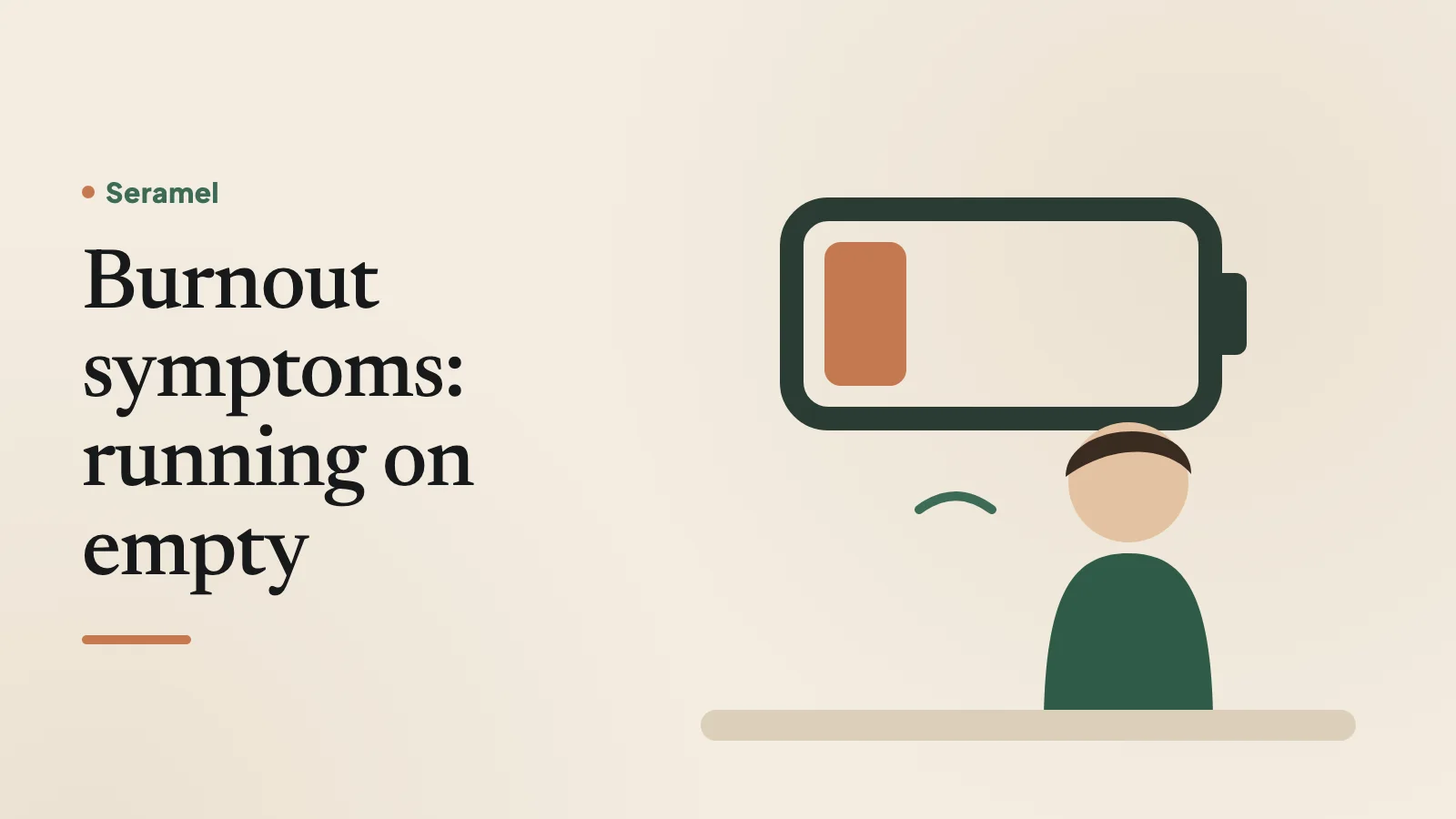
Burnout meaning: more than being tired
Being tired after a hard week is normal, and a weekend fixes it. Burnout is what happens when the hard weeks never stop, and the weekend no longer fixes anything.
A simple way to see the difference: with stress, there's too much: too many emails, too many demands, and you're racing to keep up. With burnout, there's nothing left. You stop racing. You feel flat, far away from your work, and you wonder why you ever cared.
Burnout is most often talked about at work: the nurse on endless double shifts, the teacher in the last weeks of term, the startup employee who answers Slack at midnight, the small business owner who hasn't had a real holiday in three years. But it also happens to people caring for a parent with dementia, new parents running on broken sleep, and students who've been in exam mode for months. What they share is long-term pressure with too little recovery and too little control.
Common burnout symptoms
Signs of burnout tend to show up in three places. You don't need all of them, and none of them is unique to burnout. This list is to help you notice, not to label yourself.
In your body
- Tired when you wake up, even after a long sleep.
- Sleeping badly: lying awake with your to-do list, or waking at 3am.
- Headaches, tight shoulders, a stomach that's often off.
- Catching every cold that goes around.
In your feelings
- Dread on Sunday evening or on the drive in.
- Feeling cynical, irritable or numb about work and the people there.
- A sense that nothing you do makes a difference.
- Crying more easily, or not feeling much at all.
In what you do
- Working longer hours but getting less done.
- Pulling away from friends, cancelling plans.
- Putting off simple tasks that used to take minutes.
- Needing something to switch off: a glass of wine every night, endless scrolling, sugar.
If several of these have been true for weeks, take it seriously. Burnout rarely gets better by pushing harder.
How burnout builds: the loop behind it
Burnout doesn't happen in one day. It builds through the same small moment repeated hundreds of times. For many people it looks like this:
- Trigger: someone's off sick, a new project lands, your mum calls with another appointment.
- The sentence in your head: “If I don't do it, it'll fall apart,” or “I can't let them down.”
- What you do: say yes, skip lunch, answer emails on the sofa, cancel the gym.
- What keeps it going: the short relief and the thanks. Everyone's grateful, and next time it's expected.
The workload matters, and sometimes it really is too much for any person. But inside that workload there are usually a few repeated choices you can change, like the automatic yes that many people pleasers know well. If right now you're mostly feeling that everything is too much at once, start with what to do when you're feeling overwhelmed.
What helps this week: 7 small things
Recovering from burnout usually takes longer than a week, and big changes may be needed later. But small things this week can stop it getting worse.
- Protect a sleep window. Same bedtime for five nights, screens off 30 minutes before. Not perfect sleep, just a steady window.
- Take one thing off your plate. One meeting, one favor, one commitment. Hand it back or say no to it this week.
- Take a real lunch break. Away from the desk, ideally outside, phone in your pocket.
- Switch off work notifications after a set time, for example 7pm. Tell your team if you need to.
- Tell one person how you're really doing. Not “busy”, the honest version. A partner, a friend, a sibling.
- Move gently for 15 minutes a day. A walk around the block counts. This isn't about fitness.
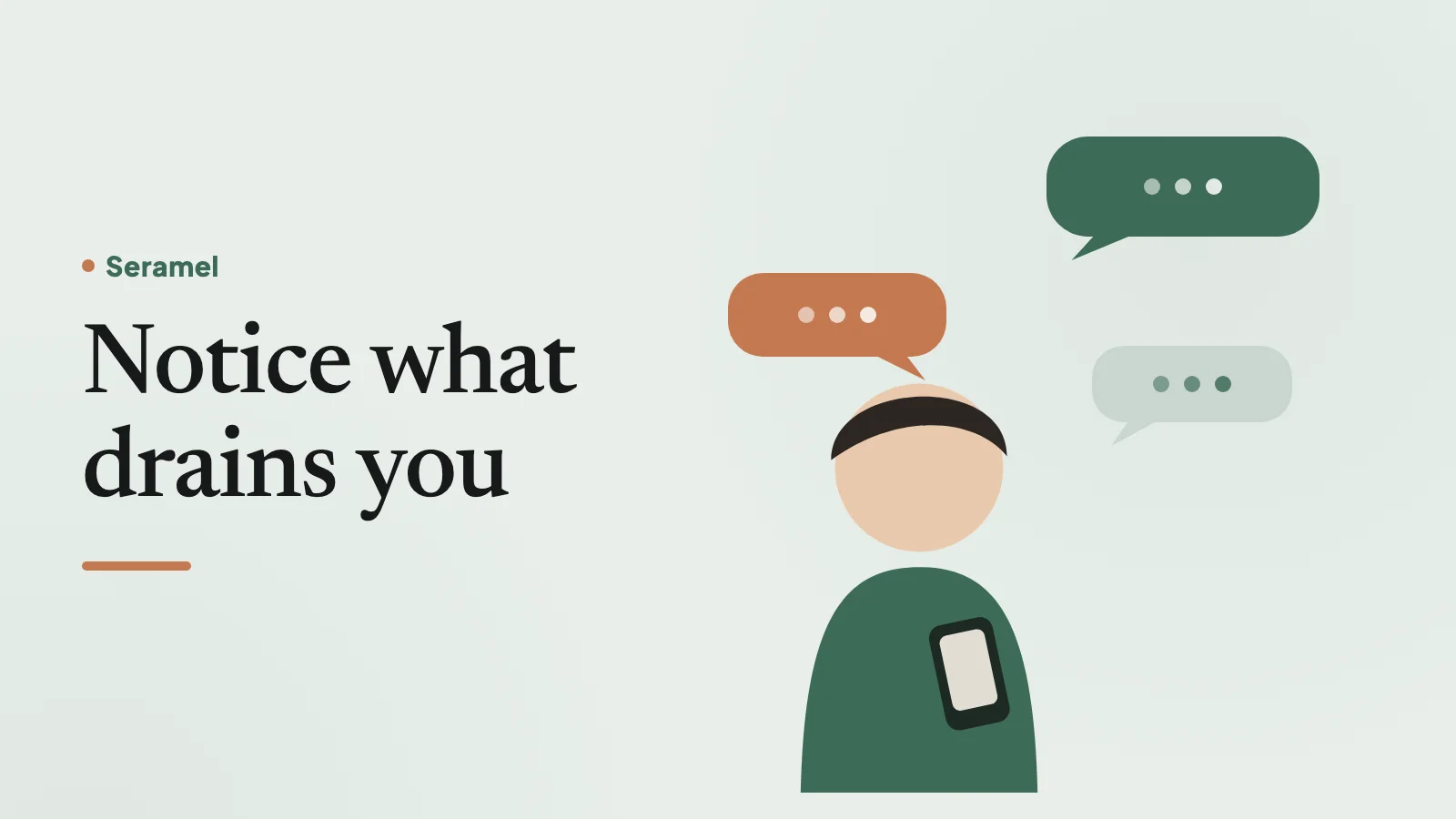
- At the end of each day, write two lines: what drained you most, and what gave a little energy back. After a week you'll see patterns you can act on.
If even these feel impossible, that's important information. Talk to a doctor.
How to talk to your manager when you're burnt out
Many people wait until they're completely empty before saying anything at work. It's easier earlier. You don't have to use the word burnout if you don't want to. Try something like:
- “I want to flag that my workload hasn't been sustainable for a while. Can we look at what can move or drop?”
- “I can deliver the report or the client onboarding by Friday, but not both well. Which matters more?”
- “I'm going to take some of my annual leave next month. I'll make sure handover is covered.”
Bring one concrete proposal rather than only the problem. And write down beforehand what you expect your manager to say. Many people are surprised: it's often more understanding than the version in their head.
If your workplace truly won't change anything, that's useful to know too. It doesn't need to be decided this week.
When to see a doctor
Burnout is not something to sit out alone. See a doctor if:
- You've felt exhausted most days for several weeks, even after rest.
- You have physical symptoms that worry you: chest pain, a racing heart, dizziness, weight changes.
- Your mood has been low most of the day, most days.
- You can't manage basic things: eating, sleeping, getting to work.
- You're relying on alcohol or other substances to get through.
A doctor can check for physical causes of tiredness and talk with you about time off and support. If you ever have thoughts of harming yourself, don't wait: call your local emergency number (911 in the US and Canada, 999 in the UK, 000 in Australia, 112 in Europe).
Seramel is not a clinical service and can't tell you whether you have burnout. What it can do is help you see what's draining you, day by day.
How Seramel helps you notice what's draining you
When you're running on empty, it's hard to see the pattern because you're inside it. Seramel helps you look at one day at a time.
In about ten minutes you tell it one moment: “I sat in the car outside work for fifteen minutes.” It asks short questions: what were you thinking about, what happened just before, what did you do next. Over a few conversations, when similar moments line up, it names the loop in your own words, such as: someone's short-staffed → “if I don't, it falls apart” → you take it on and skip lunch. It also says what keeps the loop running.
Then it offers one small step, like handing back one task by Wednesday, and next time it asks how it went, putting what you expected next to what happened. A daily mood check-in and a journal let you see whether the week is getting lighter or heavier. You can also read about 3am thoughts if sleep is where it shows up most.
Your first 8 conversations are free, no card. Seramel is not a clinical service and doesn't replace a doctor.
How a conversation starts
Want to talk it through?
One moment from today, about 10 minutes. 8 conversations free; no card, no real name.
Start your first conversation →Questions
What are the first signs of burnout?
Often it starts with tiredness that a weekend doesn't fix, dread before work, and getting irritated or cynical about things you used to care about. Many people also notice they're working longer but getting less done. Noticing these early gives you more options.
What does burnout mean?
Burnout means being worn out by long-term stress, usually from work or caring for others, to the point where rest no longer refills you. It typically shows up as exhaustion, distance or cynicism, and a sense that your efforts don't make a difference.
What's the difference between stress and burnout?
Stress usually feels like too much: urgency, racing, overload. Burnout feels like too little: empty, flat, detached. Stress can turn into burnout when it lasts for months without enough recovery or control.
How long does it take to recover from burnout?
It varies a lot from person to person. Recovery tends to be faster when the cause changes, for example a lighter workload, more support or real time off, and slower if you return to the same situation unchanged. A doctor can help you plan this.
Is there a test for burnout?
You'll find quizzes online, but no quiz can tell you what's going on in your body and life. Seramel doesn't offer a burnout test. If the signs on this page sound familiar, talk to a doctor; they can look at the whole picture and rule out physical causes.
Should I quit my job if I'm burnt out?
Try not to make the decision while you're at your most exhausted. First reduce what you can, rest, and talk to your manager and a doctor. If nothing changes after that, leaving may be the right call, but it's easier to choose clearly once you have a little energy back.