 Seramel Open the app
 Self sabotage: why you get in your own way, and how to stop
Self sabotage means doing, or not doing, things that undermine your own goals: putting off the application, picking a fight right before a good weekend, skipping the gym the day after you finally built a streak. It usually isn't about wanting to fail. It protects you from something that feels riskier than failing: being judged, being let down, or giving it everything and still not being enough. To stop, look at the exact moment it happens and what it protects you from.
Self sabotage meaning, with everyday examples
In plain words, self sabotage is when your own behavior blocks something you say you want. The tricky part is that it rarely looks like sabotage from the inside. It looks like being tired, being realistic, or just “how I am”.
Some common self-sabotaging behaviors:
- Work and study: leaving the important application until the night before, not preparing for an interview you really want, turning down a promotion because “I'm not ready”.
- Relationships: picking a fight when things are going well, testing a partner to see if they'll leave, finding a flaw in every person who's kind to you.
- Health and habits: skipping the run the day after a good week, ordering takeaway the night you planned to cook, staying up late before an important day.
- Money: a big impulse spend right after you finally started saving.
- Creative projects: finishing 90% and never showing anyone.
The pattern underneath is the same: something that matters gets close, and you do something that makes it less likely to happen.
Why do I self sabotage?
Self sabotage nearly always protects you from a feeling. A few of the most common:
- Fear of finding out. If you don't fully try, a bad result says nothing about your real ability. “I didn't even prepare” hurts less than “I gave it everything and it wasn't enough.”
- Fear of things going well. Success brings new expectations, visibility and more to lose. Staying where you are is uncomfortable, but familiar.
- An old story about yourself. If somewhere deep down you believe “good things don't last for people like me”, you may unknowingly help that story come true.
- Control. If a relationship might end, ending it yourself at least means it's on your terms.
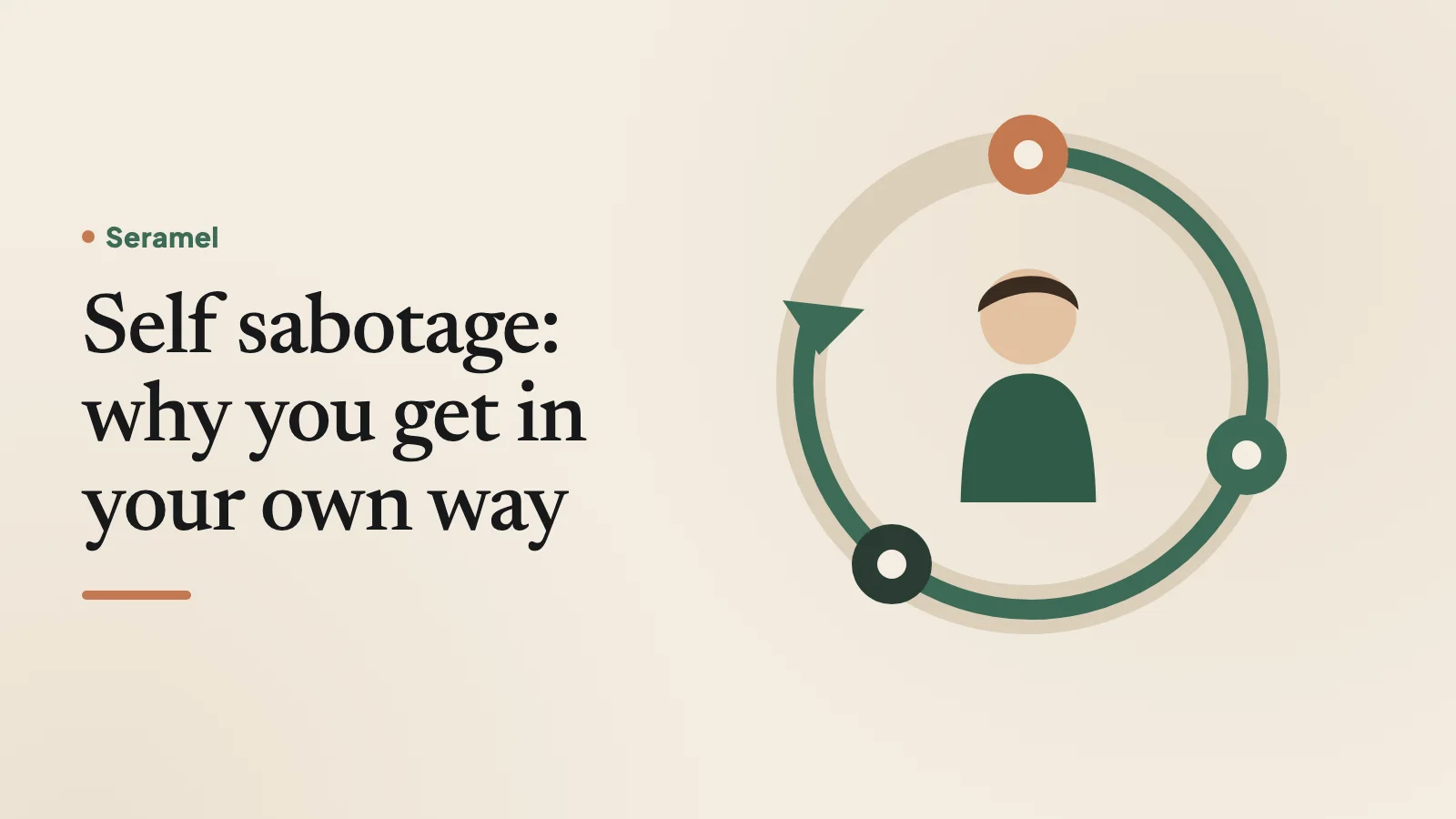
The loop usually runs like this:
- Trigger: something you care about gets close: a date, a deadline, a result.
- The sentence in your head: “If it goes badly, at least I'll have an excuse.”
- What you do: stay up late, don't prepare, start an argument, disappear.
- What keeps it going: the short relief and the excuse. You never get to find out what your real best looks like.
Signs you might be sabotaging yourself
Ask yourself honestly whether any of these sound familiar:
- Things tend to go wrong right before or right after something good.
- You have a reliable excuse ready for most of your setbacks.
- You feel strangely calm, even relieved, when a plan falls through.
- You put off the tasks that could actually change things and stay busy with the ones that can't. See how to stop procrastinating.
- You push people away when they get close, then feel lonely.
- You say yes to everyone else's plans so there's no time left for your own. That overlaps with people pleasing.
- People tell you that you're talented, and it makes you uncomfortable.
One or two of these on a bad week mean nothing. If several show up again and again, in the same order, you're looking at a loop.
Self sabotage in relationships
Relationships are where self sabotage often hurts most, because the stakes feel highest. It can look like:
- Going quiet or cold when someone gets closer, then wondering why they pulled back.
- Checking a partner's phone or “testing” their loyalty.
- Picking a fight before a holiday or an anniversary.
- Choosing people who are unavailable, so you never have to risk being fully seen.
- Ending things first, before you can be left.
The sentence in your head is often some version of “they'll leave eventually anyway”. Acting on it can make it come true, which then seems to prove the sentence was right.
If a relationship has just ended and you suspect your part in it, read how to get over a breakup. The goal isn't to blame yourself; it's to see the pattern clearly enough that the next relationship can go differently.
How to stop self sabotaging: 6 steps
You won't stop self sabotage with a big promise. You stop it by catching it earlier each time.
- Pick one recent example. Not “I always ruin things” but one scene: the night before the interview, the argument on Friday.
- Write down the order. What happened first, what went through your head, what you did, how you felt afterwards.
- Find the protection. Ask: what did this save me from? Being judged, being rejected, finding out?
- Name your warning sign. Most people have one: staying up late, cancelling plans, a certain kind of sarcasm. That's your cue.
- Choose one small opposite move for the next similar moment: go to bed at 10:30 before the big day, send the application a day early, say “I'm nervous” instead of starting a fight.
- Compare what you expected with what happened. Before you try the step, write your prediction. Afterwards, write the result. This is how the old story slowly loses its grip.
Expect to slip. Self sabotage often gets louder right when you start changing it. That's not failure; it's the loop noticing it's being watched.
What to do the moment you catch yourself
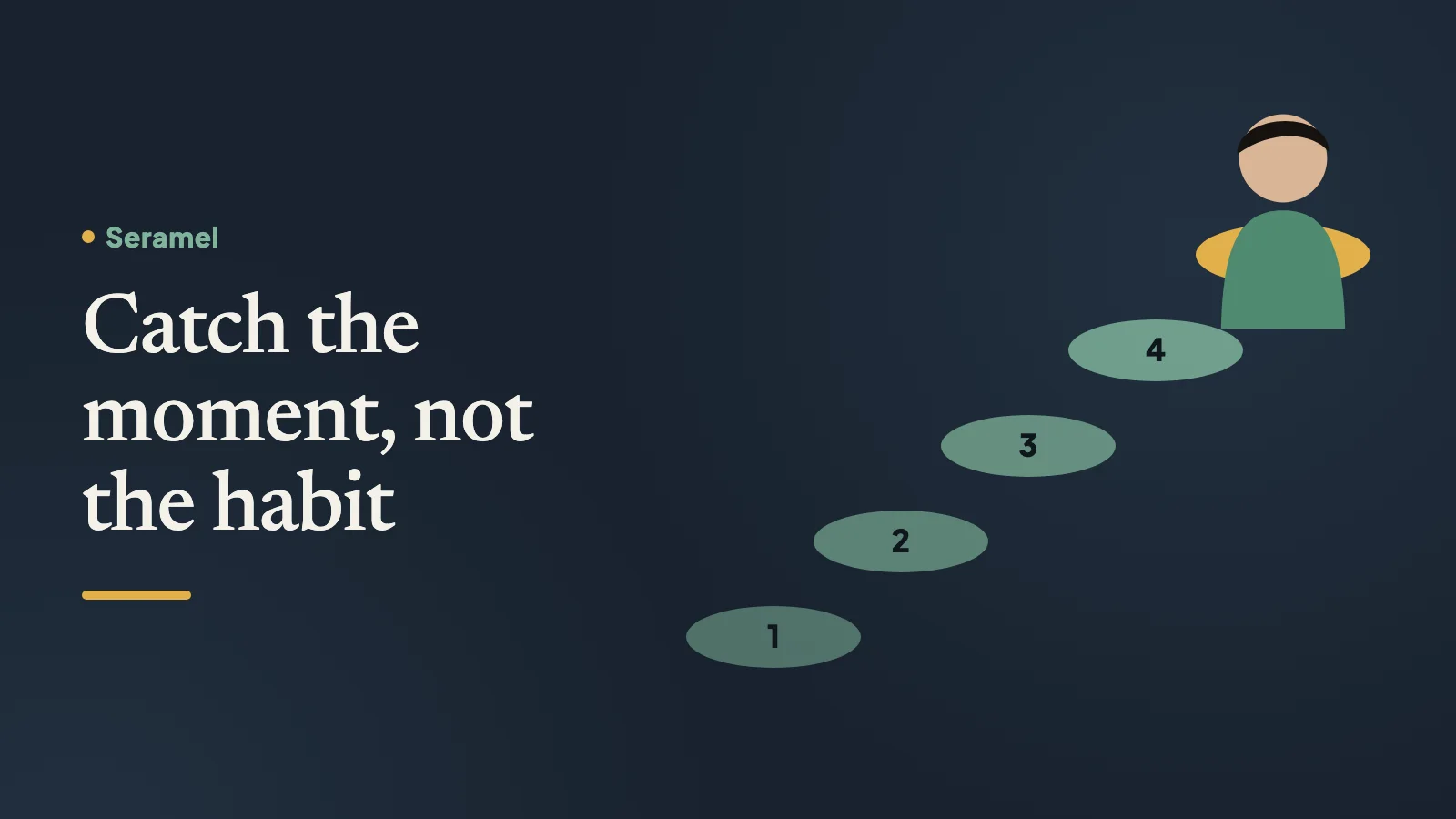
Sometimes you notice it in real time: you're about to send the cold message, open the third episode, delete the half-finished draft. A quick routine for that moment:
- Say it plainly: “I think I'm doing the thing again.”
- Pause for ninety seconds. Walk to another room, drink some water.
- Ask one question: “What am I scared will happen if I don't do this?”
- Do the smallest version of the opposite: close the laptop, put the phone on charge in the kitchen, send a shorter, kinder message.
You don't need to fix your whole life in that moment. You just need to make the next ten minutes go a little differently. If you notice you keep ending up in the same situations no matter what you try, have a look at why you keep making the same mistakes.
How Seramel helps you see where you get in your own way
Self sabotage is hard to see alone, because each time it happens there's a perfectly good reason. Seramel looks at the moments, not the reasons.
In about ten minutes you tell it one recent scene. It asks short questions: what was coming up, what went through your head, what you did instead. When a similar scene from another day sits next to it, it names the loop in your own words, for example: something that matters gets close → “if it goes badly, at least I'll have an excuse” → you stay up until 2am. And it says what keeps the loop going, which is usually the excuse itself.
Then it offers one small step to try in the next day or two. Next time it asks how it went, and puts what you expected next to what happened. Over a few weeks you can see your loops on a map and notice which steps worked.
Seramel remembers you between conversations, and you can see and delete everything it remembers. The first 8 conversations are free, no card needed.
How a conversation starts
Want to talk it through?
One moment from today, about 10 minutes. 8 conversations free; no card, no real name.
Start your first conversation →Questions
What does it mean to self sabotage?
To self sabotage means to act, often without noticing, in ways that block your own goals: not preparing, picking fights, giving up just before the finish. It usually protects you from a feeling that seems worse than failing, like being judged or finding out your best wasn't enough.
What are examples of self-sabotaging behavior?
Leaving important tasks to the last minute, staying up late before a big day, pushing away people who care about you, overspending right after you start saving, and never finishing or sharing creative work. The common thread is timing: it shows up when something good is close.
Why do I self sabotage when things are going well?
Because good things bring new risks: more to lose, higher expectations, being seen. If you're used to things going wrong, calm can feel more unsettling than chaos. Ruining it first feels like taking back control.
Can you self sabotage without realizing it?
Yes, most self sabotage isn't conscious. It feels like tiredness, bad luck or “just being realistic”. That's why looking at the order of events in real moments, rather than at your intentions, is what makes it visible.
How do I stop self sabotaging my relationship?
Notice your warning sign, like going cold, testing or picking fights, and the sentence behind it, often “they'll leave anyway”. Then try one small opposite move, such as saying “I'm feeling unsure” instead of starting an argument. If the pattern is strong or tied to painful past experiences, a mental health professional can help.
Is self sabotage a mental health problem?
Self sabotage is a very common human pattern, not a condition. But if it comes with long stretches of low mood, hopelessness or feeling unsafe, talk to a doctor or someone you trust. Seramel is not a clinical service.