 Seramel Open the app
Feeling lonely: what you can do when you feel alone
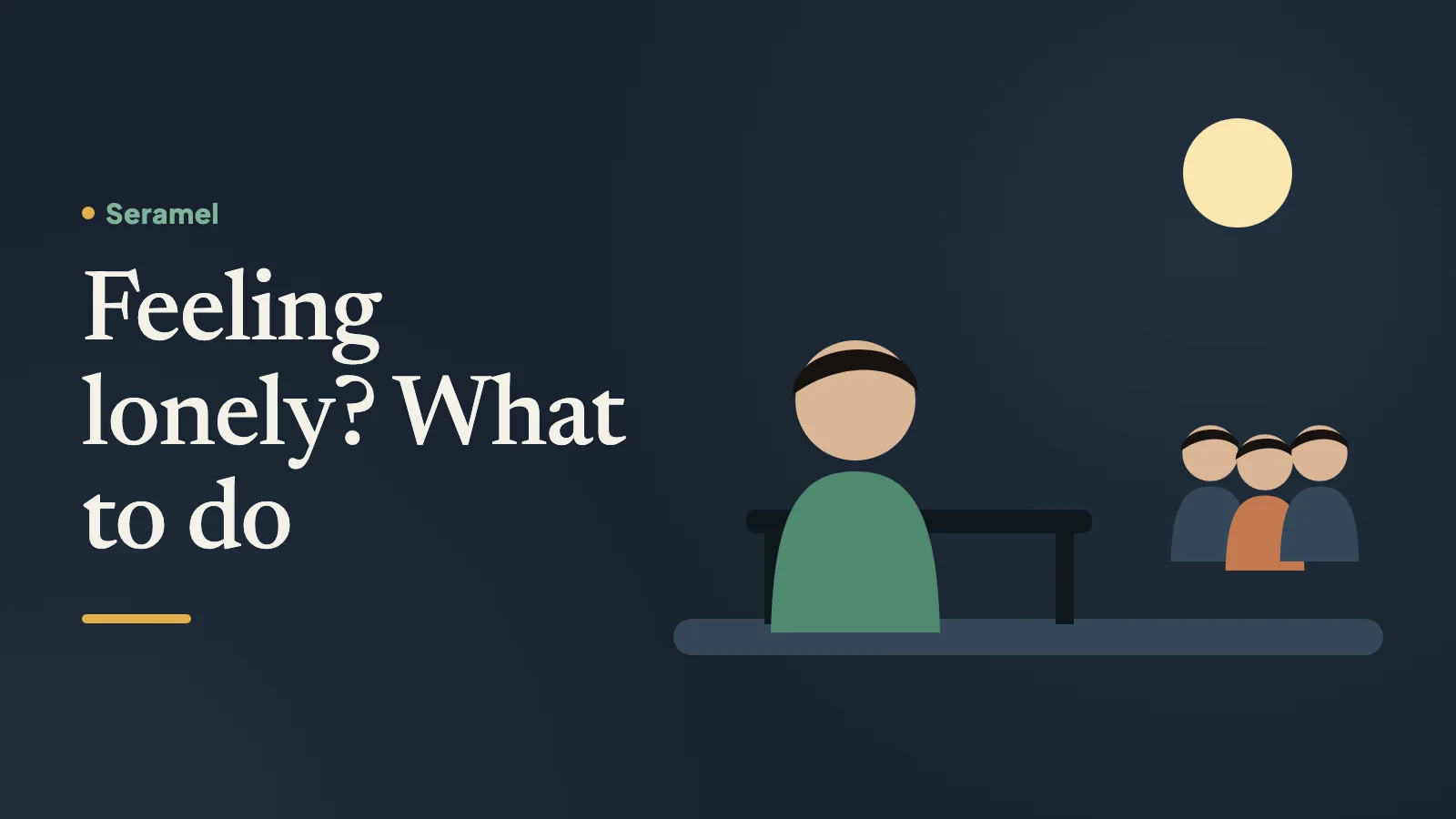
Feeling lonely is the painful gap between the connection you have and the connection you want. It can happen when you live alone, but also in a busy office, a marriage or a group of friends. What helps is usually small and repeated: one honest contact a day, a regular place where you see the same faces, and noticing the thoughts that make you pull back. If loneliness comes with thoughts of harming yourself, call your local emergency number now.
If you're thinking about harming yourself or you're in danger, call your local emergency number now (112 in Europe, 911 in the US).
Why do I feel so lonely?
Loneliness isn't the same as being alone. Plenty of people live alone and feel fine, and plenty of people with full calendars feel lonely. Loneliness is about the quality of connection: whether anyone really knows what's going on with you.
It often shows up after a change:
- Moving to a new city or country for work or study, where nobody knows you yet.
- Working from home, losing the small daily chats that used to fill the gaps.
- A breakup or divorce, which can also take away shared friends and routines.
- Friends moving into a new stage, like coupling up, having kids or moving to the suburbs, while you're somewhere else.
- Becoming a parent, especially in the first year, when days are full but adult conversation is rare.
- Retirement, or caring for someone, when your world quietly shrinks.
None of this means something is wrong with you. Feeling lonely is a signal, a bit like hunger: it tells you a need isn't being met. The question is what to do with that signal.
I have no friends as an adult: you're not the only one
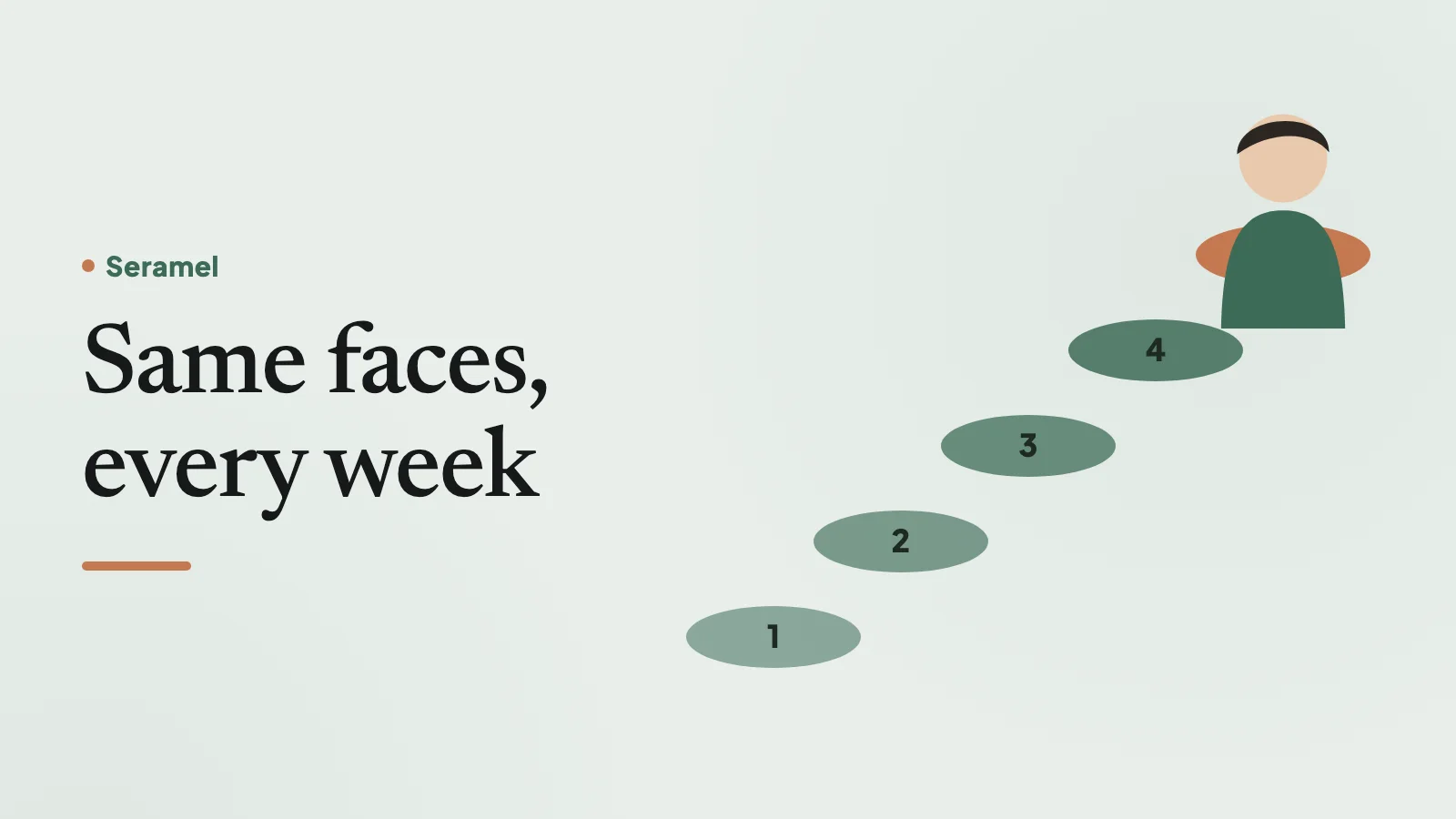
If you feel like you have no friends, you're far from alone: many adults in their thirties, forties and beyond feel the same. At school and uni, friendship came with built-in structure: the same people, every day, without needing a plan. As adults, that structure disappears, and friendships drift unless someone actively keeps them going.
What helps most is repeated contact with the same people. One-off events rarely turn into friendships; regular ones often do. Ideas:
- A weekly activity: a running group, a community choir, five-a-side football, a climbing gym, a pottery class, a pub quiz team.
- Volunteering on a fixed shift, where you see the same faces.
- A book club, a language exchange or a local community garden.
- Saying yes to the second invitation, not just the first.
- Being the one who suggests a specific plan: “Coffee on Saturday at 10?” works better than “we should hang out sometime”.
It usually takes months, not weeks. That's normal, not a sign it isn't working.
Feeling lonely in a relationship or marriage
Feeling lonely in a relationship can be even more confusing, because on paper you're not alone. It often looks like:
- Conversations that are mostly about logistics: bins, bills, school runs.
- Sitting on the same sofa, each on your own phone.
- Not sharing the things that are really on your mind, because it feels pointless or risky.
- Feeling more understood by a colleague or a friend than by your partner.
What helps is usually smaller than a big “we need to talk”:
- Make one specific bid. “Can we have dinner without phones on Thursday?” or “I'd love to tell you about something that happened at work.”
- Say the feeling, not the accusation. “I've been feeling a bit far from you lately” lands softer than “you never listen”.
- Notice your own part. Do you go quiet to avoid conflict? Many people pleasers feel lonely precisely because they never let anyone see what they want.
If you've tried and nothing changes, a couples' specialist or a mental health professional can help you both talk about it.
What to do when you feel lonely: 7 small steps
When loneliness is heavy, big plans feel impossible. Start smaller.
- Send one honest message today. Not “hey”, but something real: “I've been feeling a bit low lately and thought of you.”
- Get out among people, even without talking. A café, a library, a park. Being near others helps more than you'd expect.
- Plan one thing for the weekend, with a time and a place. Write it down.
- Reply to the old thread. The group chat you muted, the friend who messaged months ago. It's rarely as awkward as you think.
- Do one kind thing for someone, like a neighbor, a colleague or a stranger. Connection starts in both directions.
- Limit the comparison scroll in the evenings. Other people's highlights make your quiet evening feel emptier.
- Write down the thought that stops you. “They don't really want to hear from me.” Just seeing it on paper makes it less convincing.
If there's truly no one you can talk to right now, read no one to talk to? Start here.
The thoughts that keep loneliness going
Loneliness often comes with a particular set of thoughts that, without you noticing, make you more isolated. They follow a loop:
- Trigger: an invitation, a chance to reach out, a message that needs a reply.
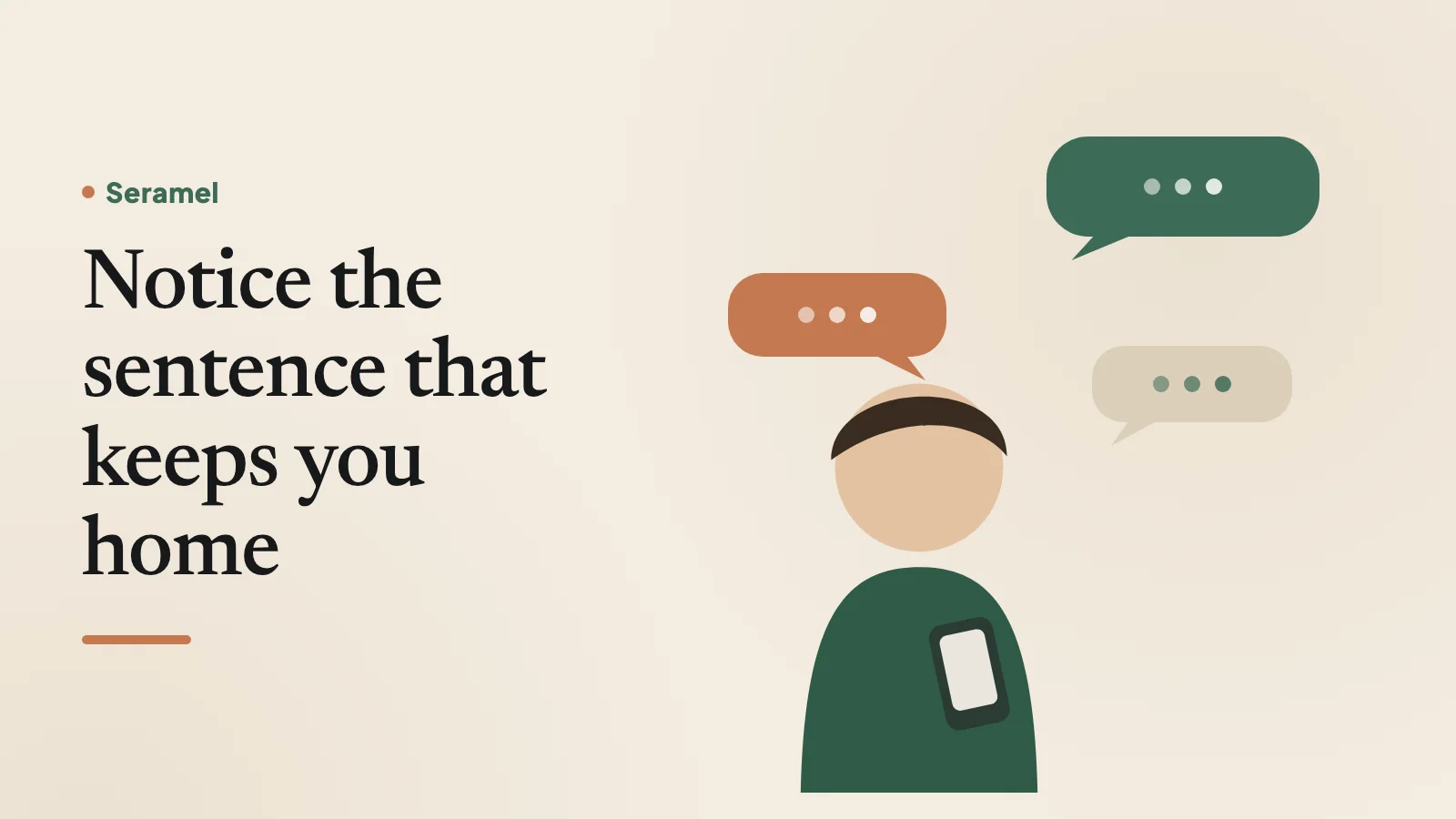
- The sentence in your head: “They're just being polite,” “I'd only be a burden,” or “I'll have nothing to say.”
- What you do: decline, don't reply, leave early, stay home.
- What keeps it going: the short relief of avoiding the awkwardness. But the evening alone seems to prove the sentence right, so next time it's even stronger.
Breaking this loop doesn't require becoming a social butterfly. It requires catching that sentence once and doing the opposite in a small way: say yes for one drink, reply with two lines. Then compare what you expected with what actually happened. If you notice yourself pulling away whenever someone gets close, read more about self sabotage.
Feeling lonely all the time: when to get more support
Loneliness that lasts for months can wear you down. It can affect your sleep, your mood and your energy, and make reaching out feel even harder.
Talk to a doctor or a mental health professional if:
- You've felt lonely most days for a long time and small steps aren't helping.
- Your mood has been low most of the day, most days.
- You've stopped doing things you used to enjoy or stopped looking after yourself.
- Night times feel especially unbearable. The 3am thoughts page has some ideas for those hours.
If you're thinking about harming yourself or you feel unsafe, please don't wait: call your local emergency number now (911 in the US and Canada, 999 in the UK, 000 in Australia, 112 in Europe).
How Seramel helps when you feel lonely
Seramel is an AI you can talk to that remembers you. It isn't a replacement for people, and it doesn't pretend to be. What it can do is give you a place to put things into words at any hour, and help you see the moments where you pull away.
In about ten minutes you tell it one moment: “Two people asked me to Friday drinks and I said I was busy.” It asks short questions: what went through your head when they asked, what did you do instead. When a similar moment from another day sits next to it, it names the loop in your own words: someone invites you → “they're just being polite” → you say no, and the evening alone seems to prove it. Then it offers one small step toward real people, like one drink this Friday, and next time asks how it went, putting what you expected next to what happened.
It remembers what you've told it between conversations, so you don't start from zero, and you can see and delete everything it remembers. Your first 8 conversations are free. If you're in crisis, Seramel points you to real people and your local emergency number.
How a conversation starts
Want to talk it through?
One moment from today, about 10 minutes. 8 conversations free; no card, no real name.
Start your first conversation →Questions
Why do I feel lonely even around people?
Because loneliness is about feeling known, not about how many people are around. You can be in a full office or a busy family and still feel nobody knows what's really going on with you. Sharing one honest thing with one person often helps more than more social time.
What should I do if I have no friends?
Start with repeated contact rather than one-off events: a weekly class, a team, a volunteering shift, the same café at the same time. Say yes to second invitations and suggest specific plans. Adult friendships usually take months to form, so keep going even when it feels slow.
Is it normal to feel lonely in a relationship?
Yes, it's more common than people admit, especially during busy years with work and kids. It's a sign that the connection needs attention, not necessarily that the relationship is over. Small, specific bids for time and honest conversation are a good place to start.
Why do I feel lonely all the time?
Long-term loneliness often follows a change, like a move, a breakup or working from home, and can be kept going by thoughts that make you pull back. If it has lasted for months, or comes with low mood, talk to a doctor or a mental health professional.
Can talking to an AI help with loneliness?
It can help you put feelings into words and notice the moments where you pull away, which can make reaching out to real people easier. But an AI isn't a substitute for human connection. Seramel is built to point you back toward people, not away from them.
How do I stop feeling lonely at night?
Plan one small contact for the next day, keep a notepad by the bed for thoughts, and remember that loneliness feels stronger at night and usually eases with daylight. If the nights feel unbearable or you have thoughts of harming yourself, call your local emergency number.
Sources
- Loneliness · NHS Every Mind Matters
- Our Epidemic of Loneliness and Isolation (2023 advisory) · U.S. Surgeon General
- WHO Commission on Social Connection · World Health Organization
- The health benefits of strong relationships · Harvard Health Publishing