 Seramel Open the app
 People pleaser: what it means and how to stop being one
A people pleaser is someone who regularly puts other people's wishes ahead of their own needs to avoid conflict, disappointment or disapproval. You say yes when you mean no, apologize for things that aren't your fault and feel responsible for everyone's mood. It usually starts as a sensible way to keep the peace. Stopping doesn't mean becoming harsh; it means catching the automatic yes and practising small, honest no's.
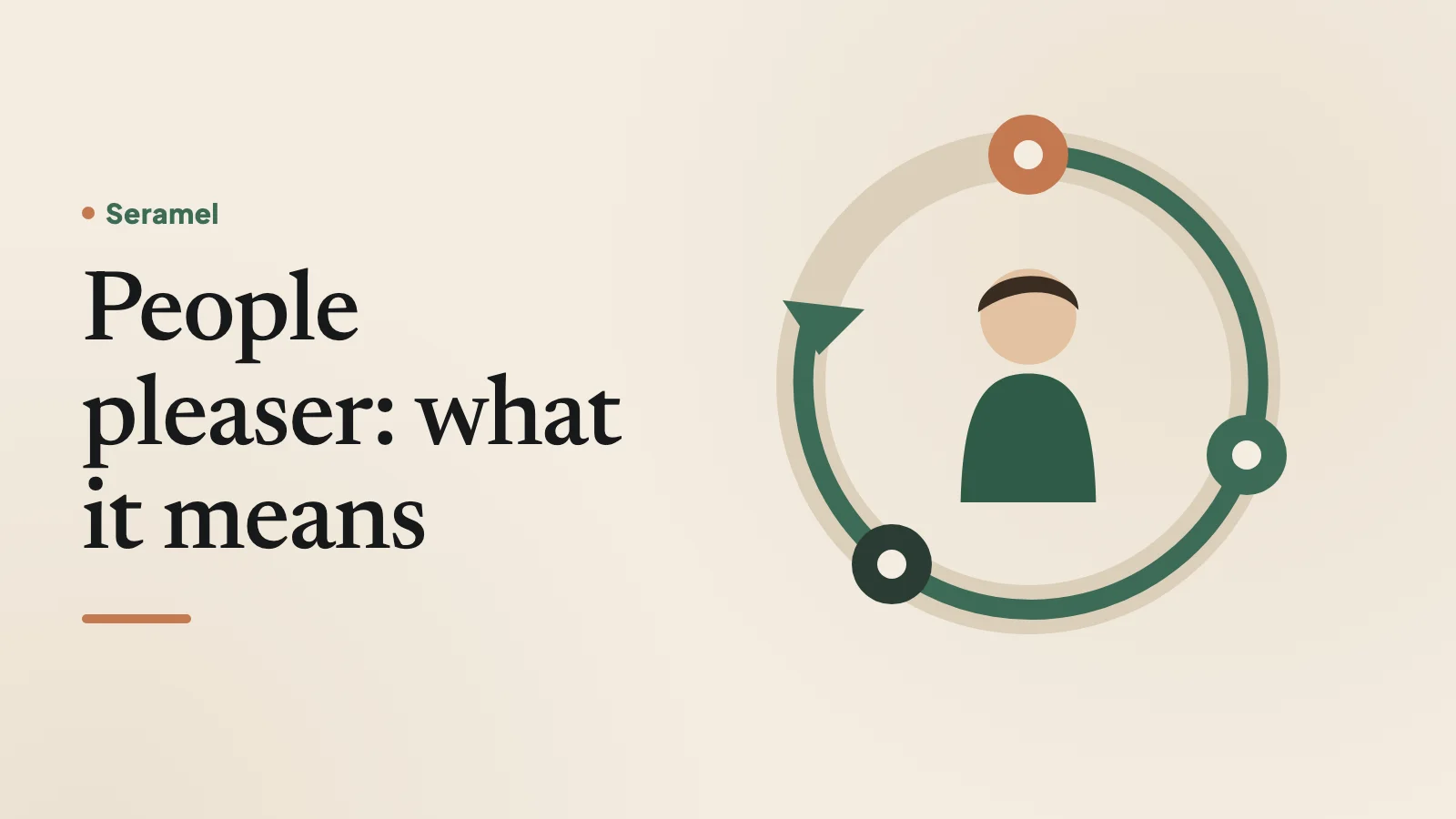
People pleaser meaning: what it looks like day to day
The people pleaser definition sounds simple, but in real life it rarely looks dramatic. It looks like being “easygoing”. A few everyday signs:
- You agree to plans, favors and extra work before you've checked whether you want to or have time.
- You rehearse messages several times so nobody could possibly be annoyed.
- You say “sorry” when someone bumps into you.
- You find it hard to say what you'd like for dinner, which film to watch or where to go on holiday.
- You notice tiny changes in someone's tone and immediately wonder what you did wrong.
- You feel resentful afterwards, but you'd never say so.
- People describe you as kind, reliable and low-maintenance, and you secretly feel invisible.
None of these is a problem on its own. Being considerate is a good thing. It becomes people pleasing when you can't not do it: when saying no, disagreeing or asking for something feels almost physically impossible.
Why do I keep saying yes when I mean no?
Because in the moment, yes is the fastest way to make an uncomfortable feeling go away. Someone asks; you feel a jolt of tension; you say yes; the tension disappears. Your brain learns that yes equals safety.
Most people pleasing follows the same order:
- Trigger: someone asks for something, looks disappointed, or goes quiet.
- The sentence in your head: “If I say no, they'll be upset,” or “a good friend would just do it.”
- What you do: you say yes, overexplain, offer more than they asked for.
- Afterwards: relief, then tiredness and quiet resentment.
What keeps the loop going is that the feared outcome is never tested. You never find out whether your sister would actually be furious if you said you couldn't babysit, because you've never said it. So the fear stays as big as it was when you were twelve.
This habit often starts early: in a family where keeping the peace mattered, where one parent's mood decided the evening, or where being helpful was the surest way to be liked. It made sense then. The question is whether it still serves you now.
Is being a people pleaser bad?
Kindness isn't the issue. The cost is. When pleasing becomes automatic:
- You run out of time and energy. Your calendar is full of other people's priorities, and your own tasks get pushed to midnight. It's no surprise that people pleasers are often also chronic procrastinators; see how to stop procrastinating.
- Resentment builds quietly. You can't show it, so it comes out sideways: sarcasm, withdrawing, or a sudden explosion over something small.
- People don't really know you. If you always agree, nobody meets the real you. That's one reason people pleasers can feel lonely even in a relationship.
- You end up running on empty. Years of saying yes to everything at work and at home is a common road to burnout.
The goal isn't to stop caring about others. It's to make your yes mean something, because it's no longer automatic.
How to stop being a people pleaser: 8 small steps
You don't change this with one big confrontation. You change it with many small, slightly uncomfortable moments.
- Buy time. Learn one sentence by heart: “Let me check and get back to you.” It breaks the automatic yes.
- Notice your body before you answer. A tight chest or a sinking feeling is information. It's your no trying to speak.
- Start with low-stakes no's. Tell the barista they got your order wrong. Pick the restaurant. Say you'd rather not watch that film.
- Say no without a long explanation. “I can't this weekend” is a full sentence. Every extra reason invites negotiation.
- Offer what you actually can. “I can't do the whole day, but I can help Saturday morning.”
- Sit with the discomfort for ten minutes. The guilt after a no peaks fast and fades. Don't fix it by taking the no back.
- Read resentment as a signal. When you feel it, ask: what did I agree to that I didn't want?
- Write down what you expect, then what happened. Before a no, note what you think they'll say. Afterwards, note what they actually said. The gap is usually bigger than you think.
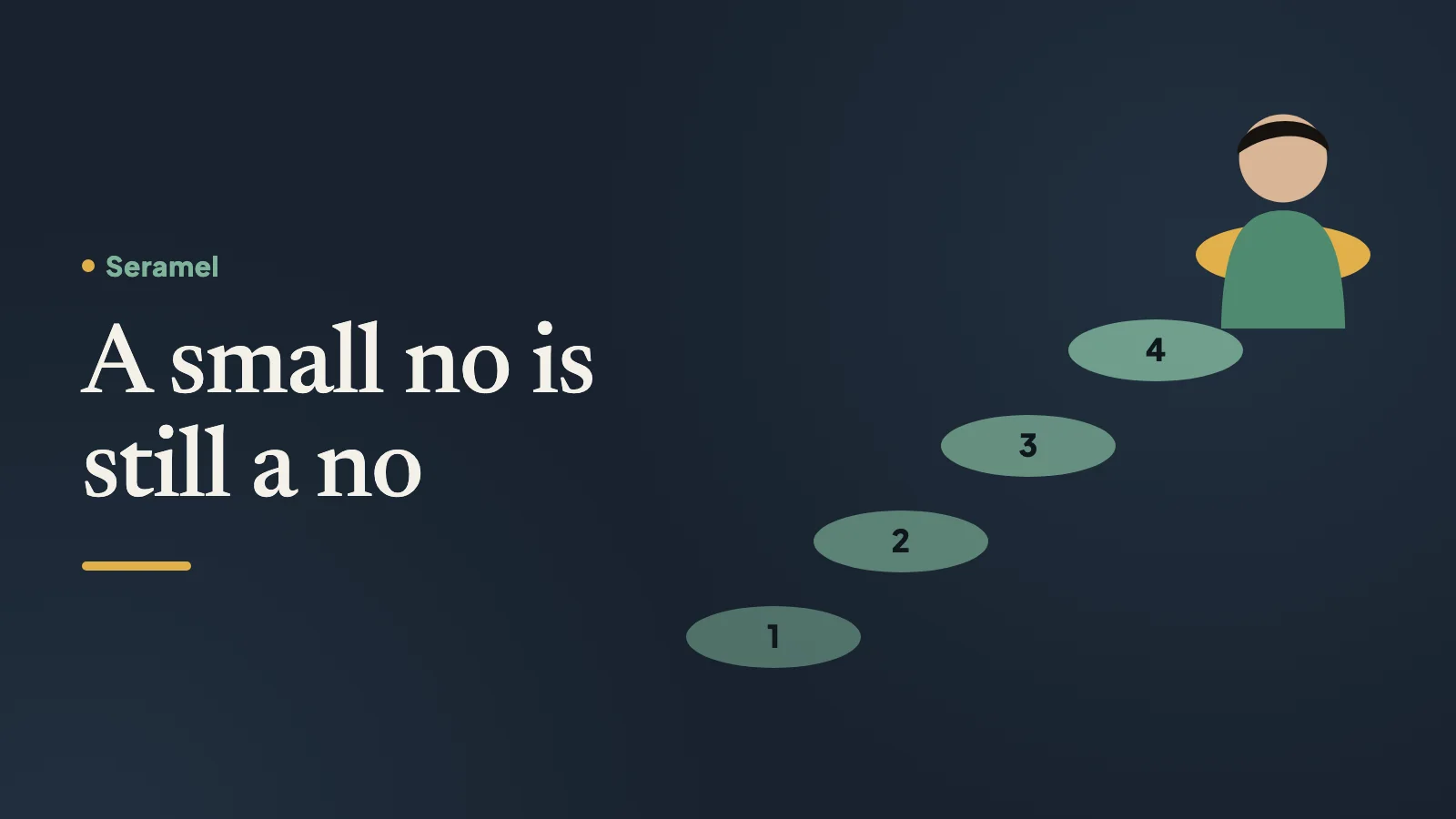
Scripts for saying no at work, with family and with friends
It's easier when the words are ready. Change them so they sound like you.
At work
- “I can take that on if we push the deadline for the report. Which one matters more?”
- “I'm not able to cover Saturday, but I can swap a weekday shift.”
- “I'd rather not take the lead on this one. I'm happy to review it.”
With family
- “We're not hosting Christmas this year. We'd love to come to yours.”
- “I can't lend money right now. I know that's not what you hoped to hear.”
- “I'm not going to talk about my weight. Tell me about your trip instead.”
With friends
- “I'm going to skip drinks tonight. I need a quiet night in.”
- “I can't help with the move this time, but I'll bring dinner the first night.”
- “I don't have the energy to talk about this tonight. Can we talk Sunday?”
Notice that none of these attack the other person or apologize three times. Short, warm, clear.
When people pleasing shows up in the same places
Most people pleasers don't please everyone equally. They have a few spots where it's strongest: a demanding manager, a parent, a partner who sulks, a friend who always needs something. Look at your last few automatic yeses and ask:
- Who was asking?
- What did you think would happen if you said no?
- What did you do instead of saying what you wanted?
If the same answers keep coming up, you're looking at a loop, not a personality trait. Loops can change, one moment at a time. If you also notice you keep choosing the same kind of person or ending up in the same situations, read why you keep making the same mistakes.
How Seramel helps you notice the automatic yes
People pleasing is hard to see from the inside, because it feels like being nice. Seramel helps by looking at real moments, not at your personality.
You tell it about one time today: “My manager asked me to stay late and I said of course.” It asks short, concrete questions: what did you think would happen if you said no? What did you do right after? When a similar moment shows up, maybe with your mum, maybe with a friend, it names the loop in your own words: someone asks → “if I say no, I'm the selfish one” → yes before you've thought. It also says what keeps it going: the quick calm of saying yes, and never testing the fear.
Then it offers one small step for the next day or two, like a single “let me check and get back to you”. Next time, it asks how it went and puts what you expected next to what happened. Many people find their friends and family took the no far better than they feared.
Seramel remembers across conversations, and you can see everything it remembers and delete any line. The first 8 conversations are free.
How a conversation starts
Want to talk it through?
One moment from today, about 10 minutes. 8 conversations free; no card, no real name.
Start your first conversation →Questions
What does people pleaser mean?
A people pleaser is someone who habitually puts others' wishes and approval ahead of their own needs, often to avoid conflict or disappointment. The key word is habitually: it's not one kind act but an automatic yes that's hard to switch off, even when it costs you time, energy or honesty.
What is another word for a people pleaser?
Common alternatives are “eager to please”, “yes-man” or “yes-woman”, “pushover” and “conflict-avoidant”. Some of these sound harsh. Most people pleasers are not weak; they're very good at reading others and have learned to put themselves last.
What causes people pleasing?
It often grows out of early experiences where keeping others happy kept things safe or calm: a moody parent, a strict school, being the “easy” sibling. Later it gets reinforced every time a yes makes tension disappear. The cause matters less than noticing the moment it happens today.
Is people pleasing a fawn response?
You may have seen “fawn response” online to describe pleasing others to stay safe. For some people, especially after frightening or painful experiences, that fits. Seramel doesn't put labels on you; if your pleasing is tied to past harm, a mental health professional can help you work with that safely.
How do I stop people pleasing without feeling guilty?
You probably won't skip the guilt at first, and that's fine. Guilt after a no is a sign you're doing something new, not something wrong. Let it peak and fade without taking the no back. It gets smaller each time.
Can a people pleaser really change?
Yes, but usually slowly and through small moments rather than a big decision. Each time you say a small no and nothing terrible happens, the old fear loses a bit of its grip. Writing down what you expected and what actually happened speeds this up.